Sudnya Mahimkar and V. A. Gokhale
Tekton
Volume 2, Issue 1, March 2015
pp. 26 – 36
 Sudnya Mahimkar is an architect and a town planner. She is a research scholar pursuing PhD from University of Pune, India. Her areas of interest include gender studies and architecture, urban design and planning. She has three research papers published in refereed journals to her credit and presented papers in one international and three national conferences. Currently she is an Associate Professor in MES’s Pillai College of Architecture, New Panvel, affiliated to the University of Mumbai, India.of the community.
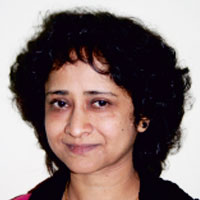 Dr. V.A. Gokhale is Professor and Head of Research Cell at Dr. B.N. College of Architecture, Pune, India. After obtaining PhD from IIT Roorkee, she has been researching in the areas of Disaster Management particularly in ‘Earthquake Resistant Architecture’ and also ‘Sustainable Architecture’. She has more than 60 published research papers to her credit.
ABSTRACT
Cities world over are predominantly planned and built for men, gender friendly cities still remain a utopian concept by and large and hence call for adequate attention and consideration. This study attempts to explore the concept of Gender-mainstreaming in city planning. Gender-sensitive cities reflect a society’s diversity; they are barrier-free, have well developed infrastructure, are interconnected and offer spaces that can be interpreted and utilised according to diverse needs. Today, Indian cities need a paradigm shift towards gender equality in spatial planning with respect to the visualisation, deconstruction and redefinition of social values and norms in urban planning procedures and policies. This paper attempts to understand the different spatial perceptions and specific needs of women. The paper looks towards planning of ‘inclusive cities’ worldwide and in India and attempts to provide directions to suggest guidelines from the lessons learnt, for planning of inclusive cities in Indian context.
KEY WORDS
Inclusive Cities, Women-friendly, Gender-sensitive, Gender Mainstreaming