Manu Mahajan
Tekton
Volume 5, Issue 2, September 2018
pp. 8 – 19
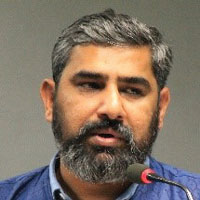 Manu Mahajan is Assistant Professor of Urban Design at School of Planning and Architecture (SPA), New Delhi. He holds Masters Degrees in Urban Design from SPA, New Delhi and Urban Economic Development from DPU, Bartlett Faculty of Built Environment, University College London, where he was a Commonwealth Scholar. Manu has more than 15 years of consulting experience in projects of urban design, urban planning and heritage management projects. His areas of research include transformation of inner cities and de-industrialization.
He sketches in pen and ink and has exhibited his works at many places in India.
m.mahajan@spa.ac.in
ABSTRACT
Traditional Indian cites were mix-use developments, with finely juxtaposed street-based living, production and trading. In contrast, cities in the West formulated mix-use policies in 1960s to deliver vibrant and compact urban areas.
In India, the modern planning movement completely ignored mixed-use and city master-plans propagated strict land-use zoning regulations. Nevertheless, mixed-use activities proliferated even in strict land-use zones, as people and markets responded to the absence/separation of vital and interdependent uses. Only recently have the master-plans of Delhi, Bangalore, Mumbai etc., introduced provisions for mixed-use.
This paper discusses the impact of mixed-use in Delhi, where despite its well-intentioned insertion, it has become a threat as a ‘planned’ element. It has caused externalities such as privatization of erstwhile public space, unsafe pedestrian environment, degenerated residential quality, and infrastructure deficiencies. The paper examines these impacts and attempts to understand mixed-use as a design tool in the Indian context to inform relevant policies.
KEY WORDS
Mixed Use, Master Planning, Public Realm, Delhi, MPD-2021.